The adjuster walked the loss on day three and asked the question every restoration PM has heard: "Why are you opening that wall?"
The wall looked dry. The baseboard looked clean. The carpet had been pulled. Air movers were already running. To the eye, the job was moving toward closeout.
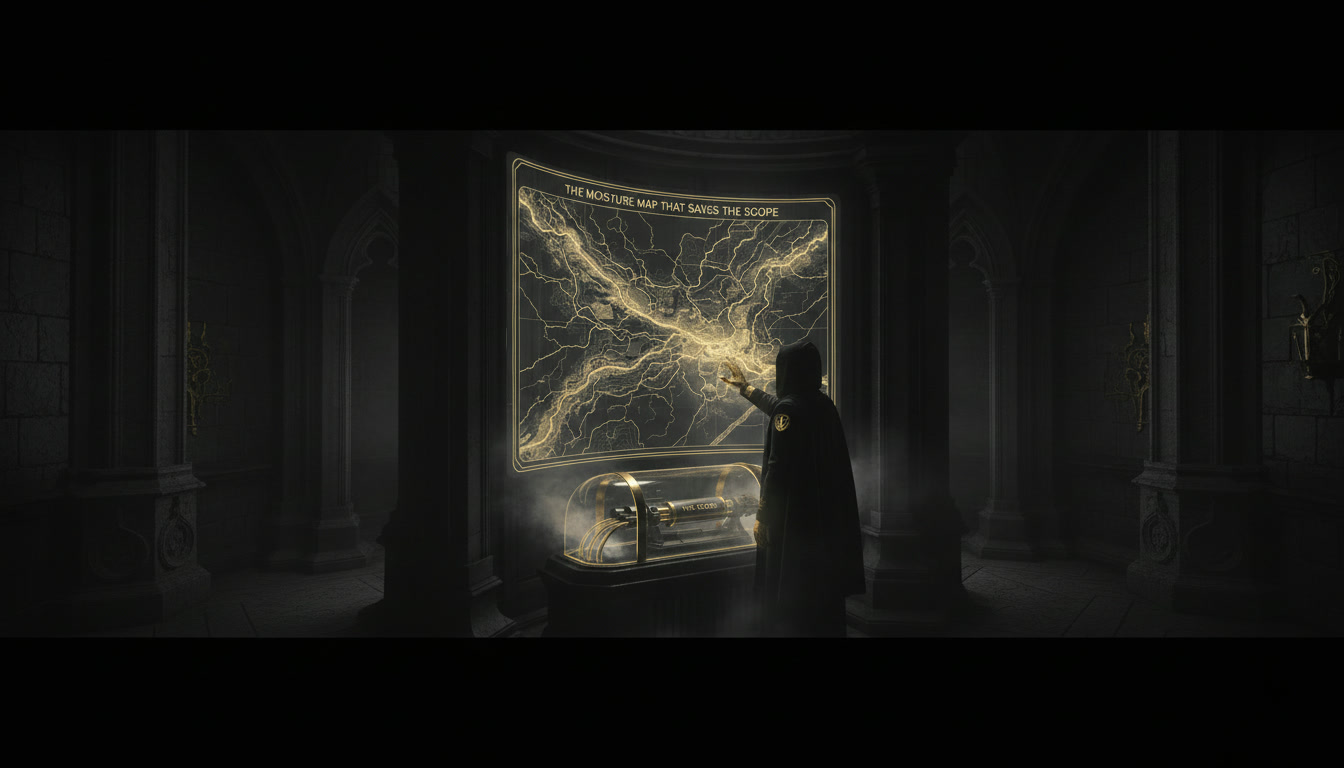
Then the lead tech put the moisture map on the folding table.
The map showed a different job. The exterior wall had high pin readings at the bottom plate, the thermal camera showed a cold band behind the cabinet run, and the GPP curve had flattened even though the dehumidifier had been running continuously. The line on the paper made the argument the wall could not make from the hallway. The wall was not "probably fine." It was wet in a defined pattern, tied to a source, documented over time.
That is what a good moisture map does. It turns suspicion into scope.
A moisture map is not a sketch
A sketch shows where the rooms are. A moisture map shows where the water is, how it is moving, and whether the drying system is winning.
IICRC S500 treats inspection, preliminary determination, documentation, material science, psychrometry, and drying technology as core parts of the water damage restoration process. The map is the field artifact that ties those disciplines together.
A professional map captures:
- Source and suspected migration path.
- Affected materials by type and assembly.
- Moisture readings by location, elevation, and material.
- Meter type, mode, and baseline/dry standard.
- Thermal anomalies that require confirmation by meter.
- Psychrometric readings: temperature, RH, GPP, dew point.
- Drying equipment placement and changes.
- Daily movement of the wet/dry boundary.
The map is not decorative documentation for the file. It is the decision system for demolition, drying, antimicrobial application, equipment changes, and carrier communication.
The first map protects the category
The opening map matters because water category changes with time, source, and contamination. A clean source can age into a more complex loss if moisture remains in porous materials long enough for microbial amplification. EPA guidance is direct: wet or damp materials dried within 24 to 48 hours are much less likely to support mold growth; unresolved moisture keeps the risk alive.
That makes the first map a race document. It establishes what was wet when the crew arrived, what could be dried in place, what needed removal, and whether the job was still inside a defensible mitigation window.
Without that first map, the contractor ends up arguing from memory. With it, the contractor can show where the loss stood when responsibility transferred to the mitigation team.
Thermal cameras find patterns; meters make decisions
Thermal imaging is one of the most abused tools in restoration because it produces compelling images. A cold area on a camera can be evaporation, missing insulation, air leakage, HVAC influence, shading, or actual moisture. The camera points the technician toward a question. The moisture meter answers it.
The right workflow is simple:
- Scan with thermal imaging to locate anomalies.
- Confirm with a pin or pinless meter appropriate to the material.
- Record the reading and the meter mode.
- Compare against a dry standard from unaffected material.
- Re-check the same point each day.
The map gets stronger when the same points are measured repeatedly. A single high reading can justify investigation. A series of readings tells whether drying is progressing.
Psychrometry tells you when the map is lying
A moisture map can look better while the building is not actually drying. This happens when surface readings fall but the air remains loaded with moisture, or when air movement evaporates water faster than dehumidification can remove it.
That is why the map has to travel with the psychrometric log. Temperature, relative humidity, GPP, and dew point tell whether the drying chamber is pulling moisture out of the structure or simply circulating humid air.
When the GPP curve flattens, the map should trigger action:
- Add dehumidification capacity.
- Adjust air mover placement.
- Open trapped cavities if readings remain elevated.
- Isolate the drying chamber better.
- Check for an unresolved source.
The wrong response is to let the equipment run unchanged because "drying takes time." Sometimes it does. Sometimes the map is telling you the drying plan is underpowered.
The map saves more than material
A clean moisture map protects margin in three places.
First, it prevents unnecessary demolition. If the wet boundary is tight and readings are falling, the contractor has evidence to dry in place where appropriate.
Second, it justifies necessary demolition. If a cavity is wet, trapped, and not responding, the contractor can open it with a documented reason instead of a guess.
Third, it prevents supplement fights from turning subjective. The carrier may disagree with price. It is harder to disagree with dated readings, equipment changes, and a wet boundary that did not move until the assembly was opened.
The map should change the equipment plan
The map is not complete if it never changes the setup. A daily moisture map should drive decisions about equipment placement, chamber size, demolition, and material handling.
If readings are falling at the center of the room but not at the perimeter, the air movers may be aimed at the easy surfaces instead of the wet assemblies. If the top of the wall dries while the bottom plate stays elevated, the cavity may be trapped or the source may still be active. If the GPP drops early and then stalls, the dehumidification curve may have hit the capacity limit of the equipment on site.
The best PMs treat every daily map as a question:
- Did the wet boundary move?
- Did the hardest material improve?
- Did the drying chamber conditions improve?
- Did the equipment setup change in response to the readings?
- Did the documentation explain why materials were removed, saved, or left under drying?
That last question is the scope saver. It makes the difference between "we opened it because it seemed wet" and "we opened it because three consecutive readings at the bottom plate remained above dry standard while the adjacent drywall face dried."
The supply list follows the map
A real moisture map creates a supply list. More air movers if the boundary is broad. More dehumidification if the chamber is loaded. Plastic and tape if the drying chamber needs tightening. Antimicrobial if the category and material condition require it. Meter batteries, probes, thermal imaging, and hygrometers because the documentation cannot stop on day two.
The contractor who maps well but cannot get the equipment to match the map is still exposed. The documentation shows the problem; the supply chain decides how quickly the crew can answer it.
Stampede stocks the tools that make that documentation real: pin and pinless moisture meters, hygrometers, thermal imagers, air movers, LGR dehumidifiers, desiccant options, containment material, and the consumables that let crews keep readings and equipment placement consistent. Water damage restoration is not just extraction. It is measurement under time pressure.
When the storm hits, your supply chain should not leave your PM arguing with a hallway photo. The map should be strong enough to carry the scope.
Sources

DFW-based distributor of restoration, abatement, and environmental supplies. Built to give crews a partner, not a vendor.