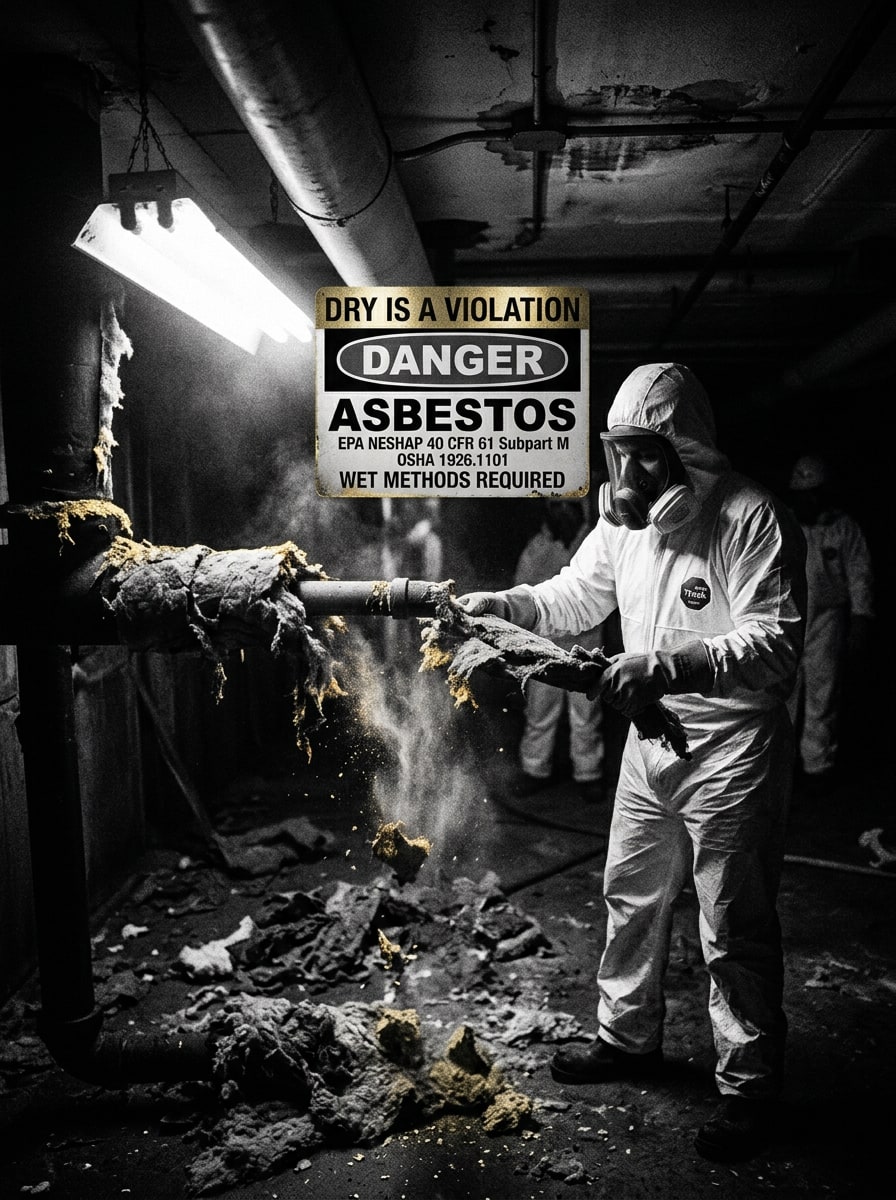
The crew did what crews do under pressure. The specified half-face respirator was out of stock in one size, the job was already scheduled, and the superintendent approved a "same protection" substitute from another brand. Same cartridge color. Same general shape. Same crew. Same work.
Not the same liability.
The problem showed up in the paperwork before it showed up in the field. Two workers had been fit-tested on a specific make, model, style, and size. The substitute was a different facepiece. The cartridge was approved for a different contaminant mix than the site exposure assessment called for. The purchase order looked like a normal substitution. The respiratory protection file looked like a broken chain.
OSHA does not treat respirators as interchangeable masks. Under 29 CFR 1910.134, respirator selection has to be based on the hazard, the user, workplace factors, NIOSH certification, and fit. The employer also has to maintain a written respiratory protection program with medical evaluation, fit testing, training, maintenance, and program evaluation.
That means a field substitution is not a purchasing decision. It is a compliance decision.
"Equivalent" is not a standard
The word "equivalent" gets contractors in trouble because it sounds technical and often means nothing. A substituted respirator has to clear several gates:
| Gate | What has to match |
|---|---|
| Hazard | Particulate, vapor, gas, oxygen deficiency, IDLH possibility |
| Certification | NIOSH approval for the configuration used |
| APF | Assigned protection factor high enough for estimated exposure |
| Fit | Same make/model/style/size as the user’s fit test, or a new fit test |
| Cartridge | Approved for the contaminant and service-life plan |
| Program file | Selection rationale and training records updated |
If one of those gates fails, the substitute may still look like PPE, but it is not the PPE the program selected.
The assigned protection factor is the floor
OSHA’s assigned protection factor table is one of the clearest places where casual substitution breaks. A half-mask air-purifying respirator has a different APF than a full-face respirator. A PAPR can have a different APF depending on the configuration and manufacturer evidence. SCBA and supplied-air systems live in a different risk category entirely.
The maximum use concentration calculation is also not optional thinking. OSHA defines MUC as a function of APF and the exposure limit. If the hazard assessment says the worker needs a full-face APR or PAPR to stay below the required level, swapping down to a half-mask because it is on the shelf is not "making do." It is changing the exposure control.
The contractor may still decide a different respirator is acceptable. But that decision has to be supported by exposure data or professional judgment, documented, and aligned with the written program. It cannot be a text message from the field.
Fit testing kills most last-minute swaps
The most overlooked part of substitution is fit. Tight-fitting respirators require fit testing before use. A worker fit-tested on one model and size is not automatically fit-tested on another. Facial geometry is not generic, and neither are sealing surfaces.
This is where a shortage becomes expensive. A distributor being out of one size of one model can force one of three outcomes:
- Delay the job until the right model arrives.
- Re-fit-test affected workers on the substitute.
- Change worker assignment so only properly fit-tested users perform the work.
Only one of those is convenient. All three are cheaper than a failed audit or an exposure allegation.
HAZWOPER makes the substitution chain wider
On spill response and hazardous-materials work, the same logic expands beyond respirators. HAZWOPER requires PPE selection based on site evaluation, known or suspected hazards, routes of exposure, and conditions that may change during response.
That means gloves, suits, boots, eye protection, and respiratory protection are part of an ensemble. Swap one part and you may create a new vulnerability: glove breakthrough, suit seam failure, splash exposure, heat stress, communication failure, or decon incompatibility.
A nitrile glove and a neoprene glove are not interchangeable just because both are gloves. A coverall designed for dry particulate is not automatically suitable for liquid splash. A P100 filter is not an organic vapor cartridge. The exposure route decides the PPE, not the shelf.
Build a substitution protocol before the emergency
The clean fix is operational. Every contractor that runs abatement, mold, biohazard, or spill work needs a pre-approved substitution matrix:
- Approved respirator models by crew member, including size and fit-test date.
- Approved cartridge/filter combinations by contaminant class.
- Glove compatibility by chemical family and expected contact condition.
- Suit type by dry particulate, splash, vapor, and decon pathway.
- Minimum on-truck par levels for each critical PPE item.
- Escalation rule for any substitute not already approved.
This sounds administrative until a Friday afternoon job depends on it. Then it is the difference between a clean substitution and a broken program.
The purchasing file should match the safety file
The fastest way to find a weak PPE program is to compare purchasing records against the written respiratory protection program. If the program says workers were fit-tested on one model, the PO should not show a different model going to the job unless there is a corresponding fit-test record. If the exposure assessment calls for organic vapor and P100 protection, the PO should not show particulate-only filters. If the SDS points to splash risk, the glove and suit selection should make chemical sense.
That comparison is not busywork. It is what an investigator, carrier, or plaintiff’s expert will reconstruct after an incident. They will not ask whether the substitute looked reasonable in the warehouse. They will ask whether the substitute matched the hazard assessment and program file.
The cleaner operating rule is this: every substitution needs a reason, a qualified approval, and a record. Backordered is a reason to call the program administrator. It is not a reason to break the program silently.
Stock depth is a compliance control
Contractors tend to think of stock depth as an operations issue: enough suits, gloves, cartridges, and respirators to avoid a job delay. In regulated work, stock depth is also a compliance control. Running out of the exact respirator size a worker was fit-tested on can force a job delay. Running out of the correct cartridge can force a hazard reassessment. Running out of the correct suit can change the exposure pathway.
That means par levels should be set by risk, not by average monthly usage. Critical PPE gets stocked to the worst credible week, because emergencies cluster. Storms, freezes, fires, and industrial incidents do not spread themselves evenly across the calendar.
Stampede’s job on the supply side is to keep the substitution question from becoming an emergency in the first place. That means stocking PPE by model, size, cartridge class, glove material, coverall type, and the consumables that keep crews from improvising. Abatement and environmental response do not leave much room for "close enough."
When the storm hits, your supply chain should not force the compliance decision. The right PPE is the PPE the program selected, the worker was trained to use, and the job hazard actually requires.
Sources
- OSHA - Respiratory Protection Standard 29 CFR 1910.134
- OSHA - Major Requirements of the Respiratory Protection Standard
- OSHA - Hazardous Waste Operations and Emergency Response 29 CFR 1910.120
- OSHA - Personal Protective Equipment
- NIOSH - Respirators
- OSHA - Asbestos Standard for Construction 29 CFR 1926.1101

DFW-based distributor of restoration, abatement, and environmental supplies. Built to give crews a partner, not a vendor.